QLED vs OLED vs LED: Which TV Technology Is Right for You?
Have you ever stood in an appliance store staring at a wall of TVs, wondering what actually makes one better than another? You’re not alone. With LED, QLED, and OLED all competing for your attention, the decision can feel overwhelming, especially when the screens look similar at first glance.
The truth is, each technology has genuine strengths and trade-offs, and the best pick depends on how you actually use your TV. Whether it’s family movie nights, catching the latest PBA game, or keeping the kids entertained on weekends, this guide explains what each one does, how they compare, and which makes the most sense for your home.
The Basics: What Each Technology Actually Means
This isn’t just about new models with shinier finishes. Three major forces are reshaping what Filipino families want from their appliances:
Rising electricity costs have made energy efficiency non-negotiable. With power bills climbing across Metro Manila and beyond, families are doing the math—and realising that paying more upfront for an inverter appliance pays for itself within a couple of years.
Smaller living spaces are driving demand for multifunctional products. As more Filipinos move into condos and apartments, the days of having separate rooms for every appliance are fading. Today’s buyers want one appliance that can do three jobs without taking up three times the space.
Affordable smart home technology has finally arrived in the Philippines. What used to be expensive and complicated is now accessible to middle-class families. Smart features that once felt like luxury add-ons now come standard on many mid-range appliances.
The result? Filipino consumers in 2026 are more informed, more selective, and more willing to invest in quality that delivers long-term value.
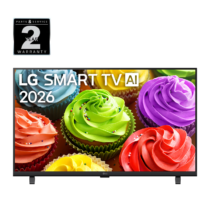
LED TVs
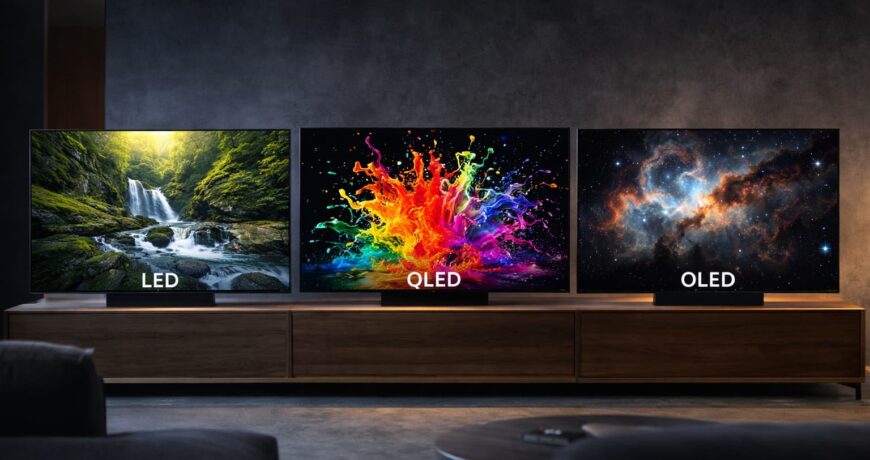
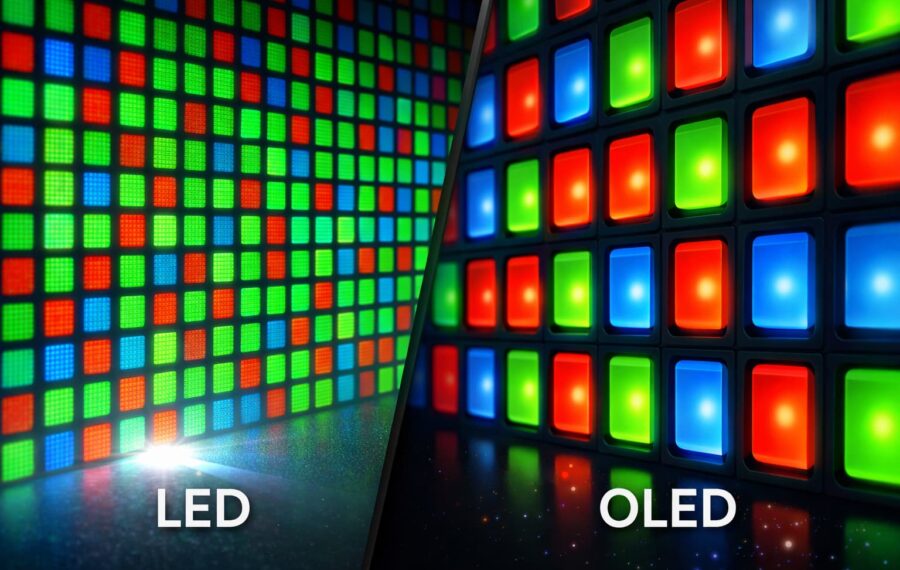
LED TVs are the most common and affordable option on the market. They work by using a backlight behind the screen to create the picture. It’s a proven, reliable technology that’s been refined over many years.
Key characteristics:
- Bright and visible in well-lit rooms
- Widest range of sizes and price points
- Reliable and energy-efficient
- Good all-round performance for everyday viewing
LED TVs have been the standard for years, and the technology continues to improve. For general use, they deliver solid picture quality at an accessible price. LED is also the only technology available in smaller screen sizes (24-32 inches), making it the go-to choice for bedrooms, kitchens, and secondary TVs.
QLED TVs
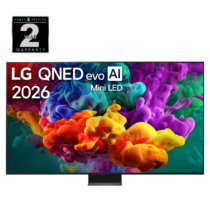
QLED stands for Quantum Dot LED. It builds on LED technology with an extra layer that produces richer, more vivid colors and higher brightness. Think of it as LED with the color and brightness turned up.
Key characteristics:
- Exceptional color accuracy and vibrancy
- Higher peak brightness than standard LED
- Excellent in bright, sunlit rooms
- No risk of burn-in
- Available across a wide price range, from mid-range to premium
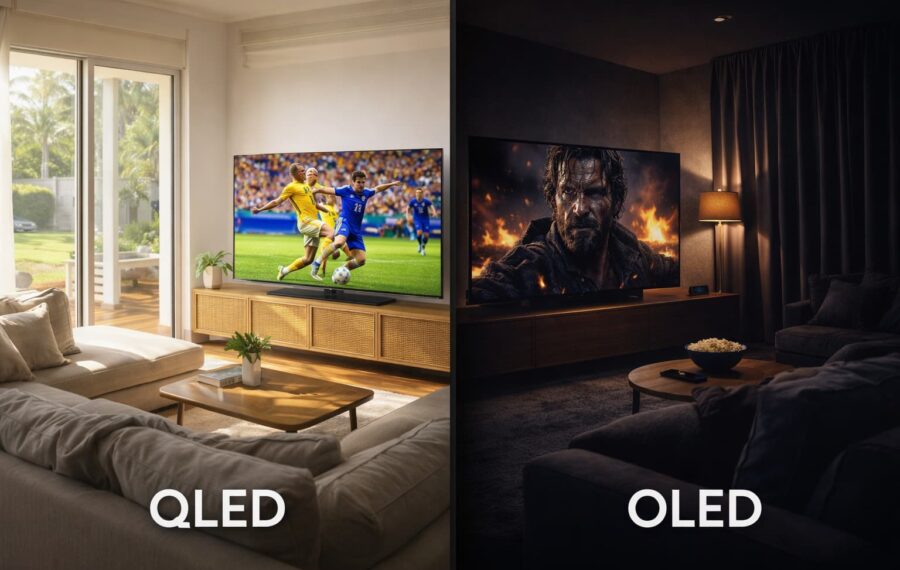
QLED is particularly strong for daytime viewing and rooms with lots of natural light, where its brightness advantage really shines.
OLED TVs
OLED stands for Organic Light-Emitting Diode. Unlike LED and QLED, OLED panels don’t use a backlight at all. Each pixel produces its own light independently, which means individual pixels can turn completely off.
Key characteristics:
- Perfect blacks and stunning contrast between light and dark
- Exceptional detail in dark scenes
- Wide viewing angles with no color shift
- Ultra-thin panel design
- Best-in-class motion handling
OLED is widely considered the premium choice for picture quality, especially for movies, dark room viewing, and anyone who values deep contrast. OLED panels typically start at 42 inches and up, so they’re best suited for main living areas rather than smaller rooms.
Head-to-Head Comparison
| Feature | LED | QLED | OLED |
| Picture brightness | Good | Excellent | Very good |
| Black levels | Average (grayish blacks) | Good (improved with local dimming) | Perfect (true black) |
| Color accuracy | Good | Excellent | Excellent |
| Viewing angles | Narrow | Moderate | Wide |
| Best room type | Any | Bright rooms | Dark or controlled rooms |
| Burn-in risk | None | None | Low (with modern panels) |
| Gaming performance | Good | Very good | Excellent (fastest response) |
| Energy efficiency | Efficient | Moderate | Varies by content |
| Price range | Most affordable | Mid-range to premium | Premium |
Which One Suits Your Lifestyle?
You watch TV during the day in a bright living room
Go with QLED. Its higher brightness and vivid colors hold up beautifully against sunlight and ambient light. In a tropical country where natural light floods through windows, you won’t find yourself closing curtains just to see the screen clearly.
You love movies and watch in a dimmer room
Go with OLED. The perfect blacks and infinite contrast make dark scenes come alive with detail. Horror films, sci-fi, and cinematic dramas look stunning on OLED.
You’re a gamer
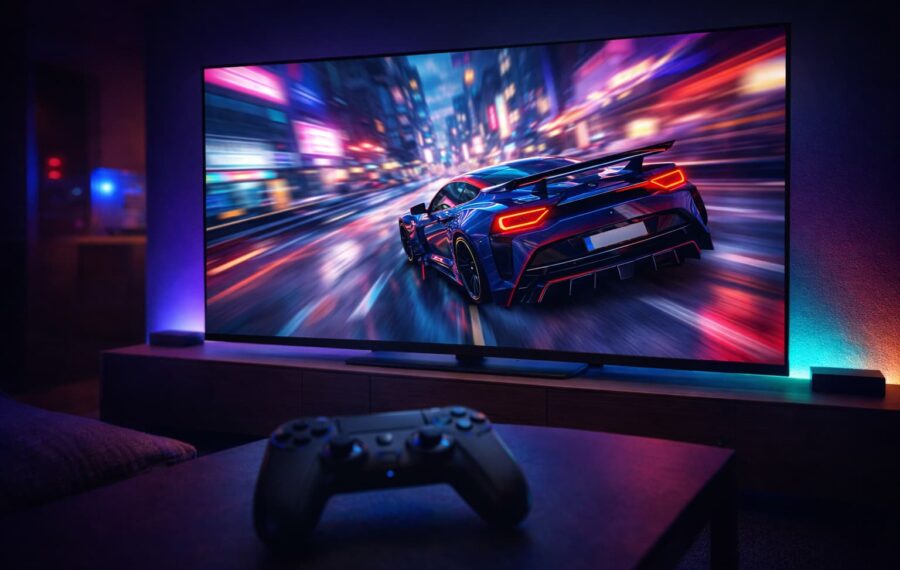
Both QLED and OLED work well, but for different reasons. OLED responds faster on screen, which means smoother motion and less blur in fast-paced games. QLED’s brightness is better for gaming in well-lit rooms, especially with HDR content. Many newer models of both support ultra-smooth 120Hz refresh rates, which reduce stutter and screen tearing during gameplay.
You need a reliable TV for everyday family use
LED or QLED are your best bet. They’re durable, versatile, and available in sizes from 32 inches up to 85 inches and beyond. No need to worry about burn-in if the kids leave a game paused on screen.
You want the best picture quality available
OLED wins here. The self-lit pixels, perfect contrast, and wide viewing angles make it the top choice for anyone who prioritizes image quality above all else.
A Note on Burn-In
Burn-in happens when a static image remains on screen for extended periods and leaves a faint permanent mark. Early OLED panels were more susceptible to this, but modern OLED TVs have built-in safeguards that automatically prevent this from happening during normal use. For normal viewing habits (watching shows, movies, gaming, sports), burn-in is unlikely to be an issue.
LED and QLED TVs are not affected by burn-in at all, which makes them a worry-free choice for displays that show static content (news tickers, dashboards, gaming HUDs) for long periods.
Smart TV Features Across All Three
Regardless of the display technology you choose, most TVs today come with smart features built in. You can expect:
- Built-in streaming apps (Netflix, YouTube, Disney+, and more)
- Voice control through built-in assistants
- Screen mirroring from your phone or tablet
- Multiple HDMI ports for consoles, sound bars, and other devices
- Regular software updates that add features over time
The display technology determines how the picture looks. The smart platform determines how you access your content. Both matter, but they’re independent decisions.
Finding the Right TV at Ansons
For over 60 years, Ansons has helped Filipino families find the right electronics for their homes. Whether you’re leaning towards the vibrant brightness of QLED, the cinematic depth of OLED, or the reliable versatility of LED, we carry a curated range of televisions from top brands like Samsung, LG, TCL, and more. Visit us in-store to see the difference in person, or browse online with the confidence of next-day delivery and dedicated after-sales support across Metro Manila.