
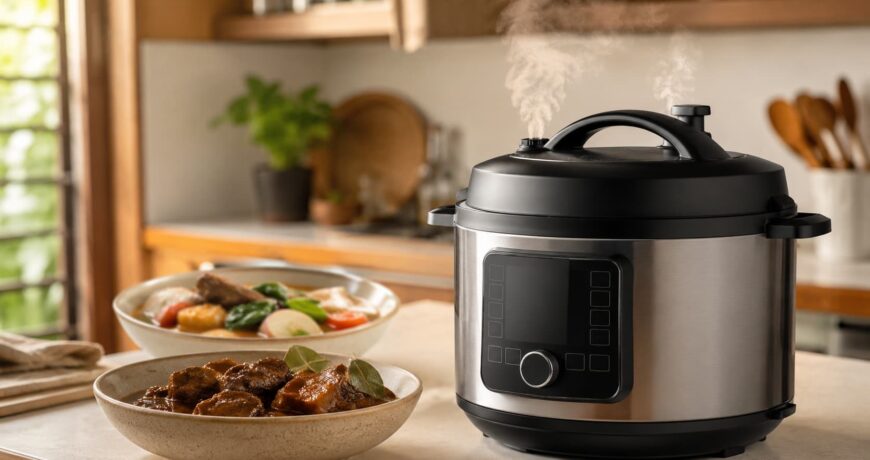
Pressure Cooker Buying Guide Philippines (2026)
Quick answer: The best pressure cooker for your kitchen depends on household size. Couples and solo cooks do well with a 3.5 to 4-litre electric multi-cooker — compact, safe, and packed with preset programs for rice, soup, and stews. Families of 4 to 6 should look at 5 to 7-litre models, available in both electric and stovetop options. Large families or regular batch cooks benefit from a 9 to 11-litre stovetop pressure cooker for bulalo, bone broth, and big-batch meals. Electric models cook up to 70% faster than conventional methods and double as rice cookers, steamers, and slow cookers.
What Is a Pressure Cooker?
A pressure cooker is a sealed pot that traps steam to build internal pressure, raising the boiling point of water above 100°C. This higher temperature cooks food significantly faster while retaining more nutrients and flavor.
Two main types:
- Stovetop pressure cooker. A heavy-duty pot placed on a gas or induction burner. Faster cooking, higher pressure, but requires more attention.
- Electric pressure cooker (multi-cooker). A standalone countertop appliance with built-in heating, sensors, and preset programs. Safer, more convenient, and doubles as a slow cooker, rice cooker, steamer, and more.
Electric vs Stovetop Pressure Cooker
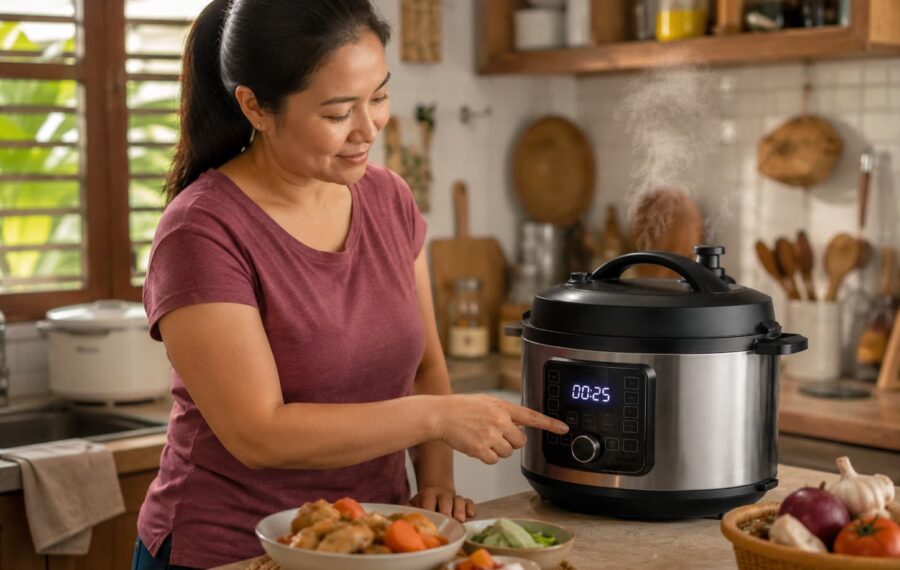
| Feature | Electric Pressure Cooker | Stovetop Pressure Cooker |
| Convenience | Set and forget (automatic pressure control) | Requires monitoring on the stove |
| Safety | Multiple safety mechanisms built in | Requires user attention |
| Speed | Fast (slightly slower than stovetop) | Fastest (higher pressure possible) |
| Versatility | Multi-function (slow cook, steam, sauté, rice) | Pressure cooking only |
| Counter space | Takes counter space | Stores like a regular pot |
| Best for | Most home cooks, beginners | Experienced cooks who want maximum speed |
Recommendation: For most Filipino households, an electric pressure cooker is the better choice due to its safety features, preset programs, and multi-cooker capability.
How to Choose an Electric Pressure Cooker
1. Capacity
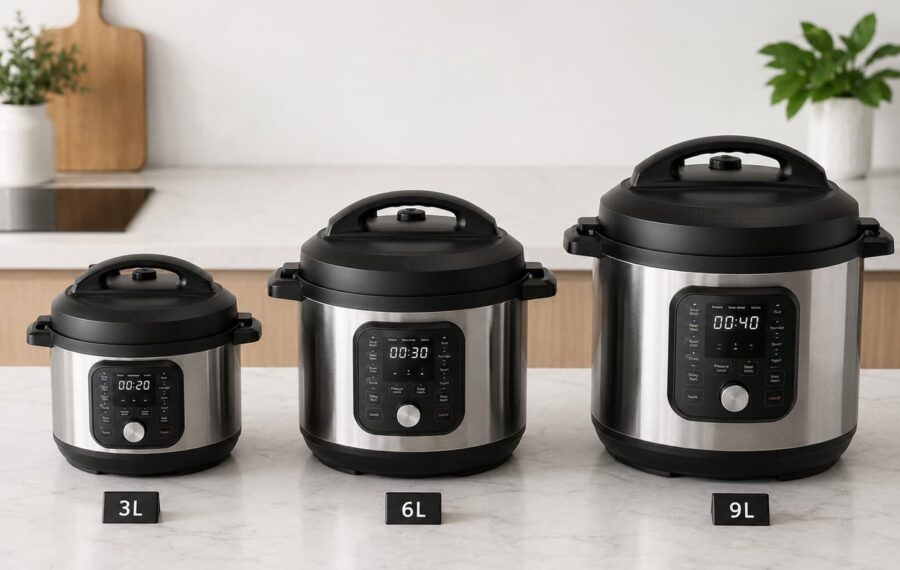
| Capacity | Serves | Best For |
| 3 to 4 litres | 1 to 3 people | Solo, couples, small side dishes |
| 5 to 6 litres | 4 to 6 people | Most families (recommended) |
| 8 to 10 litres | 6 to 10 people | Large families, batch cooking, entertaining |
💡 Important: Pressure cookers should only be filled to about two-thirds capacity (or half for foods that expand, like beans and rice). A 6-litre pot effectively holds about 4 litres of food.
2. Preset Programs
Look for programs that match how you cook:
- Rice. Essential for any Filipino kitchen.
- Meat/stew. For adobo, caldereta, mechado, and other braised dishes.
- Soup. For sinigang, tinola, and bulalo.
- Beans/legumes. For monggo and other bean dishes.
- Steam. For vegetables, fish, and dim sum.
- Slow cook. For recipes that benefit from long, gentle cooking.
- Sauté. For browning meat and aromatics before pressure cooking (eliminates the need for a separate pan).
- Yogurt. For homemade yogurt (available on some models).
3. Inner Pot Material
- Stainless steel. More durable, doesn’t scratch, no non-stick coating concerns. Harder to clean if food sticks.
- Non-stick coated. Easy cleanup, food releases easily. Coating may wear over time and need replacement.
Recommendation: Stainless steel is the better long-term choice. If you prefer non-stick, ensure replacement inner pots are available locally.
4. Safety Features
Modern electric pressure cookers include multiple safety mechanisms:
- Lid lock. Prevents opening while under pressure.
- Pressure release valve. Automatically releases excess pressure.
- Anti-block shield. Prevents food from clogging the steam vent.
- Overheat protection. Shuts off if the temperature exceeds safe levels.
- Leaky lid detection. Alerts you if the lid is not properly sealed.
What Can You Cook in a Pressure Cooker?
Pressure cookers excel at dishes that traditionally require long cooking times:
- Adobo. Pork or chicken adobo in 20 to 25 minutes (instead of 1 to 2 hours).
- Sinigang. Pork sinigang with tender meat in 25 to 30 minutes.
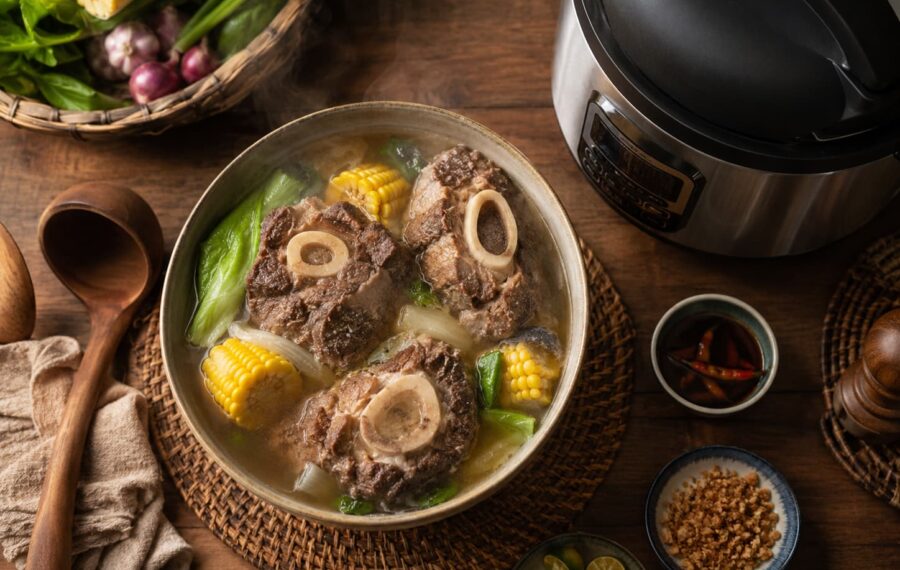
- Bulalo. Bone marrow soup with fall-off-the-bone meat in 40 to 50 minutes (instead of 3 to 4 hours).
- Caldereta and mechado. Rich, tender stews in 30 minutes.
- Monggo (mung bean soup). Perfectly soft beans in 15 to 20 minutes.
- Rice. Perfectly cooked rice in 10 to 12 minutes.
- Bone broth. Rich, gelatinous broth in 1 to 2 hours (instead of 8 to 12 hours).
- Hard-boiled eggs. Easy-peel eggs in 5 minutes.
- Beans and legumes. No soaking needed. Cooked in 20 to 30 minutes.
Top Pressure Cooker Brands in the Philippines
American Heritage
American Heritage offers a range of stainless steel pressure cookers in sizes from 4.3 to 9 litres, plus electric multi-cookers with preset programs. Their stovetop models use food-grade 304 stainless steel with multiple safety features, while their electric models cover rice, soup, stew, and steam functions.
Best for: Buyers who want durable stainless steel construction at a competitive price point.
Imarflex
Imarflex is one of the most established kitchen appliance brands in the Philippines, with a wide range of multi-function cookers and stovetop pressure cookers. Their multi-cookers double as rice cookers, steamers, and slow cookers, making them a practical all-in-one choice for Filipino kitchens.
Best for: Buyers who want a versatile multi-cooker from a trusted local brand.
Tefal
Tefal’s Home Chef Smart line combines pressure cooking with multi-cooker versatility. Available in 3.5L and 4L sizes, these models offer up to 19 preset programs covering rice, meats, soups, and even sous-vide, with adjustable cooking time, pressure, and temperature settings.
Best for: Buyers who want a feature-rich multi-cooker from a globally trusted brand.
Hanabishi
Hanabishi offers electric pressure cookers at the most accessible price points in the Philippine market. Their models include essential preset programs for rice, soup, and meat, making pressure cooking available to more Filipino households.
Best for: Budget buyers who want the convenience of pressure cooking at an accessible price.
Tips for Pressure Cooking
- Don’t overfill. Maximum two-thirds full for most foods. Half full for foods that expand (rice, beans, pasta).
- Always add liquid. Pressure cookers need at least 1 cup (250 ml) of liquid to generate steam.
- Use natural release for meat. Allowing pressure to release naturally (10 to 15 minutes) keeps meat tender. Quick release is better for vegetables to prevent overcooking.
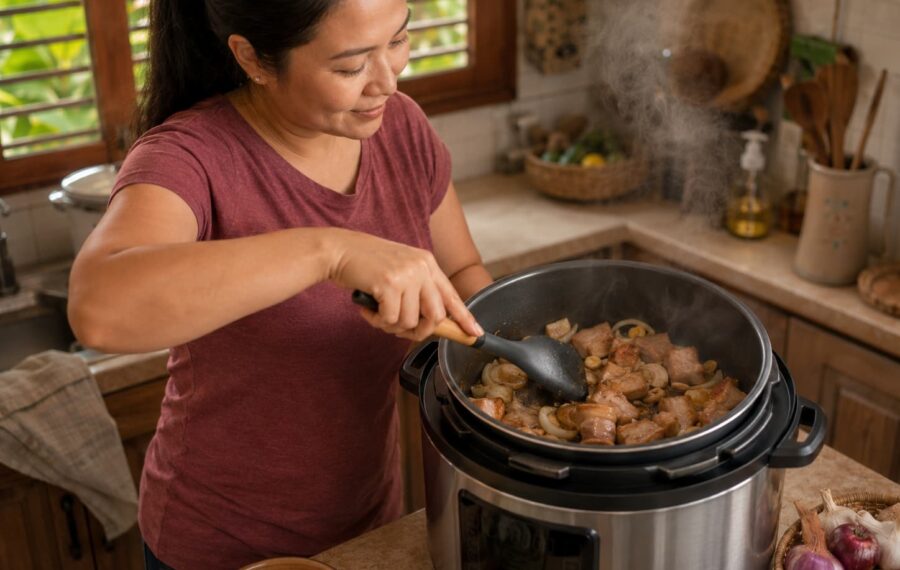
- Brown first for better flavor. Use the sauté function to brown meat and onions before pressure cooking. This develops deeper flavor. If you sauté regularly, a good range hood keeps your kitchen smoke- and odour-free.
- Cut food into similar sizes. Even-sized pieces cook evenly. Larger pieces take longer.
- Don’t pressure cook dairy. Add milk, cream, or cheese after pressure cooking to prevent curdling.
Frequently Asked Questions
Is a pressure cooker safe?
Modern electric pressure cookers include multiple built-in safety mechanisms (premium models typically have 10 or more). They are significantly safer than old-style stovetop pressure cookers. As long as you follow the manufacturer’s guidelines (don’t overfill, use enough liquid, don’t force open the lid), they are very safe to use.
Does a pressure cooker save electricity?
Yes. Pressure cooking can use significantly less energy than conventional oven or stovetop methods because shorter cooking times and a sealed environment reduce heat loss.
Can I replace my rice cooker with a pressure cooker?
Yes. Most electric pressure cookers have a dedicated rice program that produces excellent results. However, a dedicated rice cooker may keep rice warm more effectively if you cook rice multiple times a day.
How long does a pressure cooker last?
A quality electric pressure cooker lasts 5 to 8 years with proper care. The inner pot and sealing ring are the most common parts that need replacement (every 1 to 2 years for the ring, 3 to 5 years for the pot).
Is pressure-cooked food nutritious?
Yes. Pressure cooking actually retains more vitamins and minerals than boiling or steaming because the shorter cooking time and sealed environment reduce nutrient loss.
Shop Pressure Cookers at Anson's
- Browse electric pressure cookers and multi-cookers from American Heritage, Imarflex, Tefal, and Hanabishi at Anson’s. Visit any branch or shop pressure cookers online.