
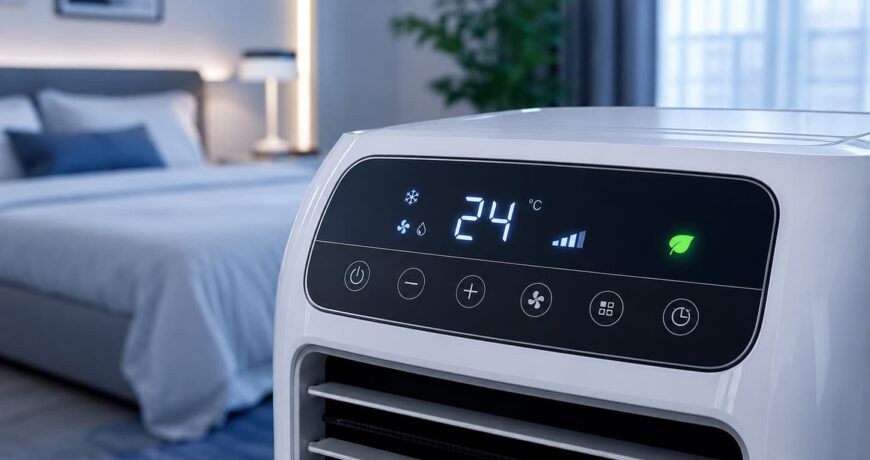
Portable Aircon Buying Guide Philippines (2026)
Quick answer: A portable aircon is a freestanding air conditioning unit that doesn’t require permanent installation. It’s ideal for renters, rooms without window access for a split-type unit, or anyone who needs flexible cooling that can move from room to room. In the Philippines, portable aircon units are available in both inverter and non-inverter models, with cooling capacities typically ranging from 1.0 to 1.5 HP.
Why Choose a Portable Aircon?
A portable aircon is a freestanding cooling unit on wheels that vents hot air through a hose to a window or wall opening. Here’s what makes it appealing:
- No permanent installation. No wall drilling, no outdoor unit, no landlord permission needed.
- Flexible cooling. Move it between rooms as needed, or take it with you when you move.
- Quick setup. Plug in, attach the exhaust hose, and start cooling within minutes.
Worth knowing before you buy:
- Less efficient than a split-type inverter for the same room size, since the compressor sits inside the room.
- Noisier than split-type units (48 to 58 dB range).
- Needs an exhaust opening. The hose must vent somewhere: a window, sliding door, or wall opening.
Portable Aircon vs Split-Type vs Window-Type
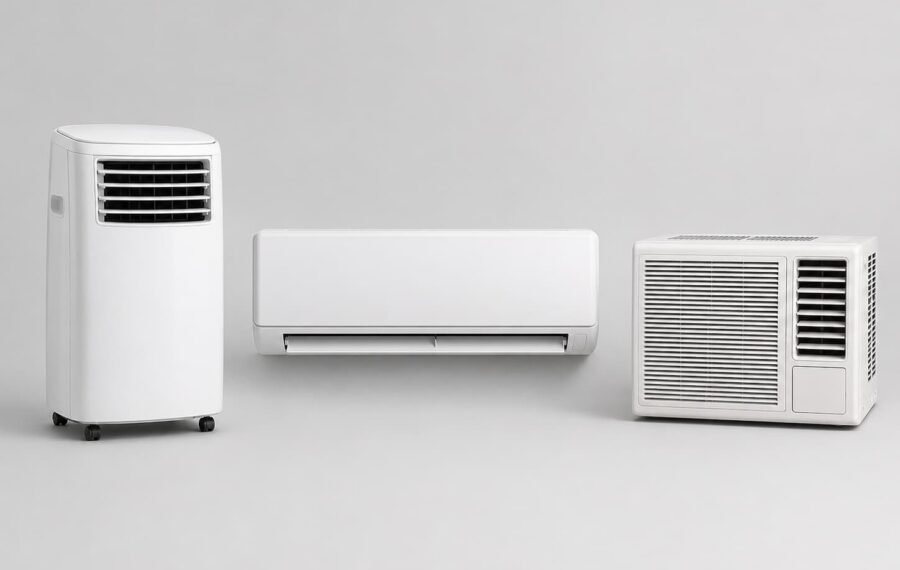
| Feature | Portable Aircon | Split-Type | Window-Type |
|---|---|---|---|
| Installation | None (plug and play) | Professional required | Window mounting |
| Portability | Yes (wheels) | No (fixed) | No (fixed) |
| Noise level | Moderate to loud | Quiet (compressor outside) | Moderate to loud |
| Cooling efficiency | Good for small-medium rooms | Best overall | Good for small rooms |
| Energy efficiency | Moderate | Best (especially inverter) | Moderate |
| Best for | Renters, flexible cooling | Permanent installations | Budget, window access |
How to Choose a Portable Aircon
1. Room Size and Cooling Capacity
Portable aircon units are sized by HP (horsepower), the same way all aircon is sold locally. Higher HP means more cooling power for larger rooms.
| Room Size (sqm) | Recommended HP | Best For |
|---|---|---|
| Up to 12 sqm | 0.75 to 1.0 HP | Bedrooms, small offices |
| 12 to 20 sqm | 1.0 to 1.5 HP | Living rooms, medium rooms |
| 20 to 28 sqm | 1.5 HP | Large rooms, open spaces |
⚠️ Important: Portable aircon units are generally best for rooms up to 25 sqm. For larger spaces, a split-type inverter is more effective and energy-efficient.
2. Inverter vs Non-Inverter
- Inverter portable aircon units adjust compressor speed to maintain temperature, using less electricity once the room is cool. They cost more upfront but save money over time.
- Non-inverter units run at full power until the set temperature is reached, then cycle off. They cost less but use more electricity over extended periods.
Recommendation: If you plan to use the portable aircon daily (e.g., in a bedroom overnight), invest in an inverter model. For occasional use, a non-inverter unit is fine.
3. Single-Hose vs Dual-Hose
- Single-hose models vent hot air out and draw replacement air from inside the room. They are simpler but slightly less efficient because they create negative pressure.
- Dual-hose models have a separate intake hose that draws outside air for the condenser. More efficient, but bulkier and less common in the Philippine market.
Most portable aircons sold in the Philippines are single-hose. For typical Filipino room sizes, a single-hose model is sufficient.
4. Noise Level
Portable aircons range from about 48 dB (relatively quiet) to 58 dB (noticeable). For bedroom use, look for models rated below 52 dB. Check the product specifications before buying.
5. Drainage
Portable aircons collect moisture (condensate) from the air. There are three common drainage methods:
- Self-evaporating. The unit evaporates most condensate through the exhaust hose. Minimal maintenance.
- Gravity drain. A hose directs water to a floor drain. Good for continuous use.
- Manual tank. You empty a collection tank periodically. Most common in budget models.
Top Features to Look For
- Timer function. Set the unit to turn on before you arrive home or off after you fall asleep.
- Remote control. Convenient for adjusting settings from across the room or from bed.
- Dehumidifier mode. Useful during the rainy season when humidity is high but cooling isn’t needed.
- Washable filter. Easy maintenance and better air quality.
- Caster wheels with locks. Easy to move, stable when in use.
Portable Aircon Brands Available in the Philippines
| Brand | Strengths | Notable Models |
|---|---|---|
| Carrier | Trusted brand, strong service network | Carrier portable series |
| Midea | Good value, inverter options | Midea portable inverter |
| Honeywell | International quality, dual-hose options | Honeywell MN series |
| American Home | Budget-friendly | APA series |
| Dowell | Affordable entry-level | PA series |
Installation Tips
Even though portable aircons don’t need professional installation, proper setup makes a big difference in cooling performance:
- Position the unit near a window. The exhaust hose should be as short and straight as possible. Long or kinked hoses reduce efficiency.
- Seal the window gap. Most units come with a window kit. If yours doesn’t, use foam insulation or a window seal kit to block hot air from coming back in.
- Keep clearance around the unit. Leave at least 30 cm of space around the air intake and outlet for proper airflow.
- Place on a flat, hard surface. Avoid carpet or uneven floors that could block the bottom air intake.
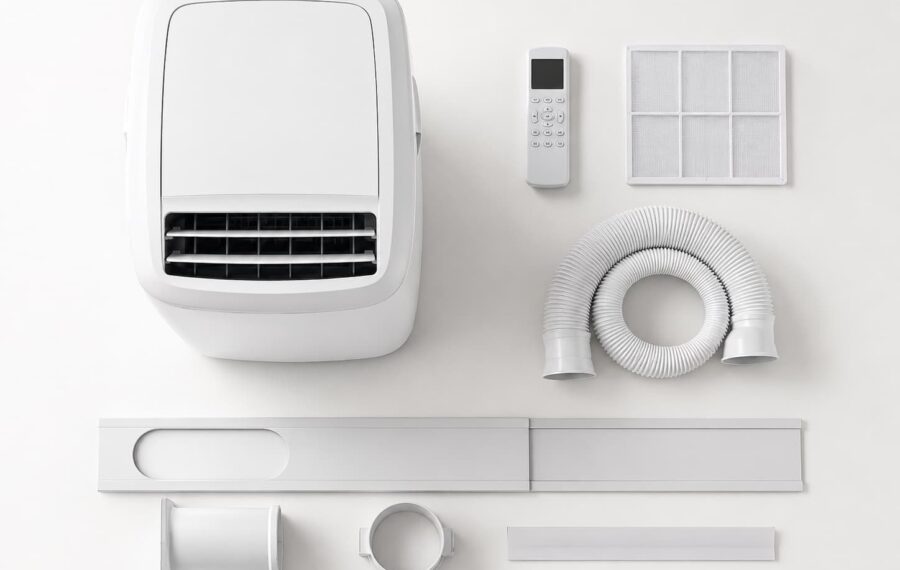
Shop Portable Aircon at Ansons
Browse portable air conditioners from leading brands like TCL, Carrier, and Panasonic at Ansons. Visit any branch or shop online for the latest models.
Frequently Asked Questions
Is a portable aircon good for hot and humid weather?
Yes, but with caveats. Portable aircons work well for small to medium rooms (up to 20 to 25 sqm) in hot and humid conditions. For larger rooms or spaces with heavy sun exposure, a split-type inverter will perform better.
How much electricity does a portable aircon use?
A 1.0 HP portable aircon uses approximately 900 to 1,200 watts per hour. An inverter model will use less once the room reaches the target temperature. Expect monthly electricity costs of roughly PHP 1,500 to 3,000 for 8 hours of daily use, depending on the model and electricity rates.
Can I use a portable aircon without a window?
Technically, the exhaust hose needs to vent somewhere. Options include a sliding door, a drop ceiling, or a dryer-style wall vent. Without any exhaust opening, the hot air stays in the room and the unit cannot cool effectively.
How often do I need to drain a portable aircon?
Self-evaporating models rarely need draining. Manual-tank models need draining every few hours to every few days, depending on humidity levels and runtime.
Is a portable aircon quieter than a window-type?
Generally, they produce similar noise levels (48 to 58 dB). Some premium portable models are quieter than budget window-types, but a split-type inverter will always be the quietest option.