First-Time Homeowner’s Appliance Checklist: What You Actually Need in 2026
Moving into your first home is one of life’s most exciting milestones. But once the keys are in your hand and the celebration settles, reality hits: you need to fill your new space with the appliances that will make it truly liveable.
If you’re feeling overwhelmed by endless product options, conflicting advice, and budget constraints, you’re not alone. This first home appliances checklist for the Philippines will help you prioritise your purchases, plan your budget, and make smart decisions that you’ll appreciate for years to come. At Ansons, we’ve been helping Filipino families set up their homes for 60 years, and we’ve seen thousands of first-time homeowners navigate this exact journey.
Before You Buy: Questions Every First-Time Homeowner Should Ask
Before you start shopping, take a moment to assess your specific situation. These questions will help you make smarter purchasing decisions:
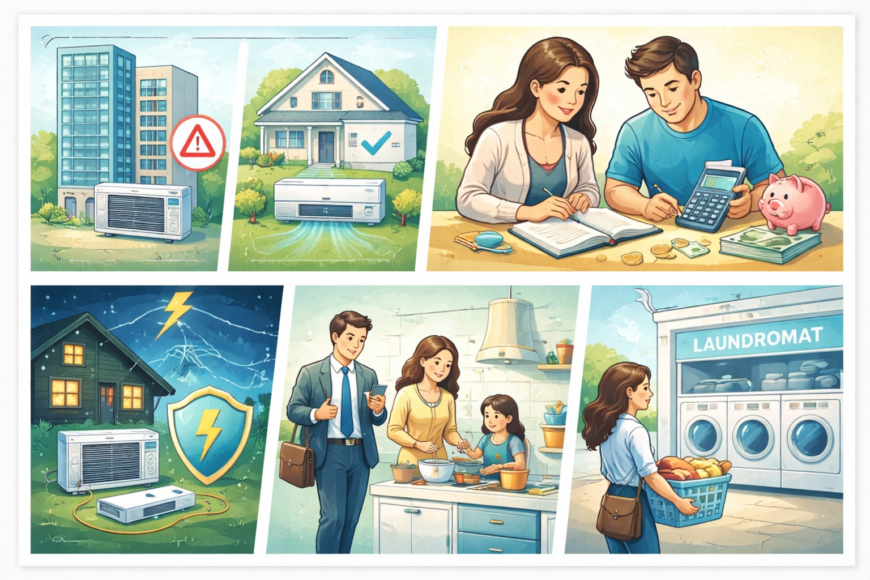
What type of property do you have? Condos often have restrictions on window-type aircons and may require specific installation approvals. Houses give you more flexibility but may need more cooling capacity.
What’s your realistic budget? Be honest about what you can afford now versus later. It’s better to buy essentials first and upgrade gradually than to stretch your budget on everything at once.
How stable is your power supply? If you experience frequent brownouts, investing in inverter technology and surge protection becomes more important.
What’s your lifestyle like? A busy professional who eats out often may not need a full-sized refrigerator immediately, while a family that cooks at home will prioritise kitchen appliances differently.
Can you access laundry services nearby? If there’s a laundromat down the street, a washing machine might not be a day-one purchase.
Answering these questions will help you personalise this checklist to your actual needs rather than buying based on what everyone else says you “must have.”
Your First Home Appliances Checklist: The Essential Three You Need on Day One
These are non-negotiables for most Filipino homeowners. You’ll want these ready before or immediately after you move in:
1. Refrigerator
Why it’s essential: Food storage and safety. Without refrigeration, you’re limited to shelf-stable foods or daily trips to the market.
What to look for: For singles or couples, a 7-9 cubic foot two-door refrigerator provides enough space without overwhelming your kitchen. Families should consider 10-12 cubic feet or larger.
Inverter vs standard: Inverter models cost more upfront but can cut your electricity consumption by 30-40%. Given that refrigerators run 24/7, this investment pays for itself within 2-3 years through lower electric bills.
Philippine-specific tip: Look for models with strong freezer sections. Our tropical climate means ice and frozen goods are essential for keeping cool and preserving food longer.
2. Cooling Solution (Aircon or Fan)
Why it’s essential: Comfort and sleep quality in our heat and humidity. This directly affects your health and productivity.
What to look for: The right choice depends on your budget and property type.
Window-type aircon is the most budget-friendly cooling option if your building allows it. These units are straightforward to install and maintain, though they’re louder than split-type systems.
Split-type aircon offers quieter operation and better energy efficiency, especially in inverter models. Installation costs more, but the comfort upgrade is significant.
Electric fans (especially DC inverter stand fans) are the fallback if aircon isn’t in the budget yet. They’re affordable, portable, and use minimal electricity.
Sizing matters: Too small and your aircon works overtime (wasting electricity). Too large and you’re overpaying. A 0.5 HP unit suits rooms up to 15 sqm, while 1.0 HP handles up to 25 sqm.
3. Washing Machine
Why it’s essential: Unless you plan to hand-wash everything or visit a laundromat weekly, you’ll need this within the first month.
What to look for: Top-load washing machines are more affordable and use less water. Front-load models clean more thoroughly, are gentler on clothes, and often include washer-dryer combos—perfect for condos without outdoor drying space.
Capacity guide: Singles and couples can manage with 7-8 kg capacity. Families need 9-10 kg or more.
Philippine-specific tip: If you’re in a condo without a balcony or outdoor space, strongly consider a washer-dryer combo. Manila’s rainy season makes indoor drying essential, and nothing beats the convenience of wash-and-dry in one machine.
Month One Must-Haves: Building Your Foundation
Once the essentials are handled, these appliances will make daily life significantly more comfortable:
Rice Cooker
Rice is a staple in Filipino meals, and a good rice cooker takes the guesswork out of preparation. Look for models with a “keep warm” function so you’re not reheating rice multiple times daily. A 1.8-2.0 litre capacity suits most households.
Microwave Oven
Reheating leftovers, defrosting frozen goods, and quick meal prep all become easier with a microwave. A 23-litre capacity with keep-warm function handles most household needs. Look for ceramic enamel interiors—they’re easier to clean than standard coatings.
Water Heater or Electric Kettle
Morning showers are much more pleasant with hot water, especially during the cooler months. For the kitchen, an electric kettle makes coffee, tea, and instant meals quick and convenient.
Iron
If you work in an office or anywhere requiring pressed clothing, a steam iron is essential. Look for models with auto-shutoff features for safety.
The "When Budget Allows" List: Smart Upgrades for Later
These appliances improve quality of life but aren’t urgent purchases:
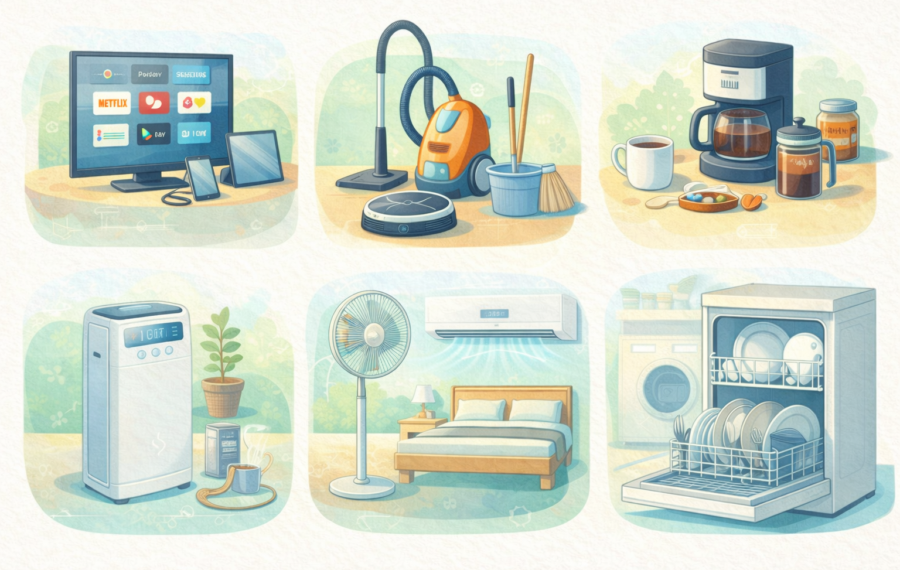
Television – If you stream content on your laptop or phone, this can wait. When you’re ready, smart TVs with built-in streaming apps offer the best value.
Vacuum Cleaner – Helpful for deep cleaning, but a broom and mop work fine initially. Robot vacuums are convenient but should be considered luxury purchases for now.
Coffee Maker – Coffee lovers will eventually want one, but instant coffee or a French press can tide you over.
Air Purifier – Increasingly important for urban air quality, but not as urgent as cooling or cleaning appliances.
Additional Cooling Units – Once your primary living space is comfortable, you might add aircon or fans to bedrooms.
Dishwasher – Rare in Filipino homes due to space constraints and cost, but convenient if you have a larger kitchen and budget.
Budget Planning: Sample Appliance Budgets
Here are three realistic scenarios to help you plan:
₱50,000 Budget: The Essentials Only
- Refrigerator (7-9 cu.ft, non-inverter): ₱18,000-₱22,000
- Window-type aircon (0.5-0.75 HP) OR quality stand fan: ₱12,000-₱18,000
- Top-load washing machine (7-8 kg): ₱10,000-₱15,000
- Rice cooker: ₱2,000-₱3,000
- Microwave (basic 20-23L): ₱4,000-₱6,000
This budget covers day-one essentials and basic cooking. You’ll add items gradually over the next 6-12 months.
₱100,000 Budget: Comfortable Start
- Refrigerator (9-11 cu.ft, inverter): ₱28,000-₱35,000
- Split-type inverter aircon (1.0 HP): ₱25,000-₱35,000
- Front-load washing machine (8 kg): ₱25,000-₱30,000
- Rice cooker (multi-function): ₱4,000-₱5,000
- Microwave (23L with advanced features): ₱6,000-₱8,000
- Electric kettle: ₱1,500-₱2,500
- Steam iron: ₱1,500-₱2,000
- Stand fan (backup cooling): ₱3,000-₱4,000
This budget gives you inverter technology where it matters most, better energy efficiency long-term, and comfortable daily living from day one.
₱150,000 Budget: Premium Setup
- Refrigerator (12+ cu.ft, inverter with smart features): ₱40,000-₱50,000
- Split-type inverter aircon (1.5 HP or two 1.0 HP units): ₱40,000-₱50,000
- Washer-dryer combo (8-9 kg): ₱40,000-₱50,000
- Multi-function rice cooker: ₱6,000-₱8,000
- Convection microwave: ₱10,000-₱12,000
- Smart TV (43-50 inch): ₱20,000-₱30,000
- Coffee maker: ₱5,000-₱8,000
- Water heater, kettle, iron, and additional items: ₱10,000-₱15,000
This budget lets you set up a fully equipped home with premium features and energy-efficient models throughout.
Inverter vs Standard: Where to Invest for Long-Term Savings
Inverter technology is everywhere now, but is it worth the premium price? The answer depends on the appliance:
Always choose inverter for:
Refrigerators – Running 24/7 means the energy savings add up quickly. A ₱5,000-₱8,000 premium pays for itself in 2-3 years.
Aircons – These are your biggest electricity consumers after refrigerators. Inverter aircons use 30-50% less power and maintain more stable temperatures. The premium pays for itself in 3-4 years, sometimes sooner if you run the unit daily.
Consider inverter for:
Washing machines – Savings are moderate since these only run a few hours per week. Choose inverter if your budget allows, but it’s not as critical as refrigerators and aircons.
Fans – DC inverter fans use 40% less electricity than standard AC fans, but since fans already use minimal power, the absolute savings are small. Worth it if you’ll use the fan daily year-round.
Skip inverter for:
Appliances used occasionally – Rice cookers, microwaves, kettles, and irons aren’t used long enough to justify inverter premiums.
The bottom line: Invest in inverter technology for appliances that run continuously or for many hours daily. For occasional-use items, standard models are perfectly fine.
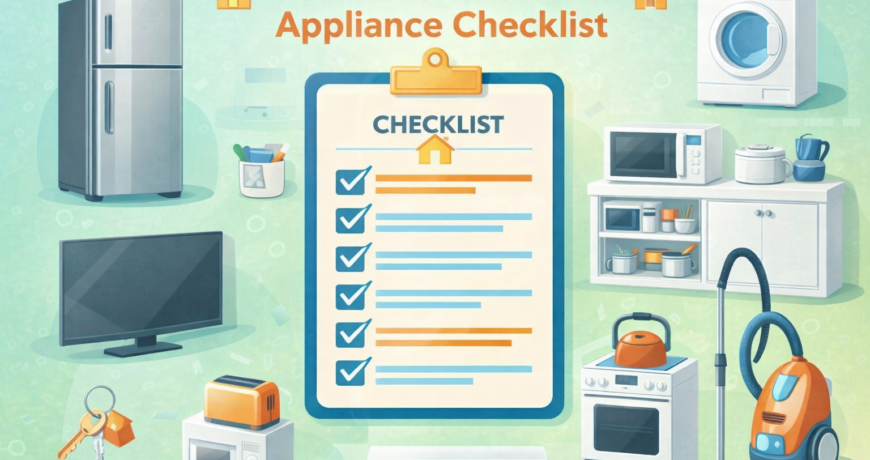
Your First Home Checklist
Here’s a printable checklist to track your purchases:
Day One Essentials
- [ ] Refrigerator (size: _ cu.ft)
- [ ] Cooling solution (aircon or fan)
- [ ] Washing machine (capacity: _ kg)
First Month
- [ ] Rice cooker
- [ ] Microwave oven
- [ ] Water heater or electric kettle
- [ ] Iron
When Budget Allows
- [ ] Television
- [ ] Vacuum cleaner
- [ ] Coffee maker
- [ ] Air purifier
- [ ] Additional cooling units
- [ ] Other: _
Installation & Services Needed
- [ ] Aircon installation (if applicable)
- [ ] Water heater installation (if applicable)
- [ ] Delivery scheduling
- [ ] Warranty registration
Making Your Purchase: What to Look For
When you’re ready to buy, keep these factors in mind:
Brand reliability matters – Major appliances are long-term investments. Stick with established brands from authorised retailers. This ensures genuine products, valid warranties, and access to service centres if something goes wrong.
Warranty coverage – Check what’s covered and for how long. Compressor warranties on refrigerators and aircons are especially important since these are the most expensive components to replace.
Delivery and installation – Factor in delivery costs and installation services, especially for aircons and water heaters. Professional installation protects your warranty and ensures safe operation. At Ansons, we offer same-day and next-day delivery on many products to help you get settled in quickly.
Energy ratings – Look for yellow Energy Efficiency labels. The more stars, the lower your electricity costs over time.
Space measurements – Measure your spaces before shopping. Nothing’s worse than buying a refrigerator that doesn’t fit through your kitchen door or an aircon that’s wrong for your room size.
Read reviews – Real user experiences help you avoid models with common problems and identify the most reliable options.
Common First-Timer Mistakes to Avoid
Buying everything at once – It’s tempting to fully equip your home immediately, but this strains your budget and leaves no cushion for unexpected expenses. Buy essentials first, then add items as your budget recovers.
Choosing style over substance – A beautiful appliance that breaks down in a year isn’t a good deal. Prioritise reliability and functionality over aesthetics.
Ignoring energy efficiency – Cheap upfront costs can mean expensive electricity bills for the next 10 years. Calculate the total cost of ownership, not just the purchase price.
Wrong sizing – Too small means you’ll need to upgrade sooner. Too large wastes money and energy. Take time to calculate your actual needs.
Skipping warranty registration – You paid for warranty coverage—don’t lose it by forgetting to register your appliances within the required timeframe.
Forgetting about installation – Budget for professional installation on items that need it. DIY installation can void warranties and create safety hazards.
Not planning for power fluctuations – Invest in surge protectors for expensive electronics. Brownouts and power surges are common in the Philippines and can damage sensitive appliances.
Your Partner in Setting Up Your First Home
At Ansons, we’ve been helping Filipino families navigate these decisions since 1966. Whether you’re working with a tight budget or investing in premium appliances, our goal is to guide you toward choices you’ll be happy with for years to come.
We carry premium brands from trusted manufacturers, offer same-day and next-day delivery on many products, and provide installation services to ensure everything is set up correctly from the start. Our heritage is built on the values of hard work, integrity, and deep sincerity toward people—values that guide every customer interaction.
Setting up your first home is a journey, not a race. Start with the essentials, plan your purchases thoughtfully, and invest in quality where it counts. Before you know it, your new house will truly feel like home.
Ready to start shopping? Visit our showrooms across Metro Manila or browse our complete selection online, where you’ll find detailed specifications, customer reviews, and competitive pricing on all the appliances in this guide.